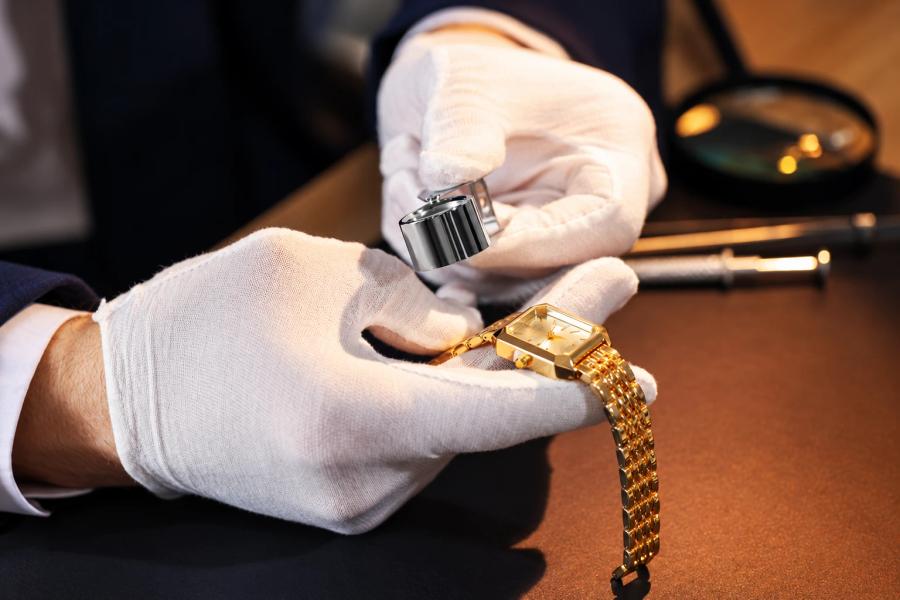
How pawnbroking works
A pawn loan is one of the oldest forms of borrowing and one of the least well explained. This guide sets out how pawnbroking works in the UK, what it actually costs, what the law requires of a pawnbroker, and when it is the wrong choice.

What is a pawnbroker?
A pawnbroker is a lender who gives you a loan secured against an item you own. You hand over the item, the pawnbroker holds it, and you get it back when you repay the loan and the interest. Your credit history is not the basis of the decision. The item is.
In the UK, pawnbroking is a regulated credit activity. Pawnbrokers must be authorised by the Financial Conduct Authority, and pawn agreements are governed by Part VIII of the Consumer Credit Act 1974.
What does "pawn" mean?
To pawn something is to pledge it as security for a loan. The item is called the pledge or the pawn, and the paper record you are given is the pawn receipt, often still called the ticket. Pawning is not selling. Ownership stays with you for as long as the agreement runs.
What do pawnbrokers do?
Pawnbrokers do three things: they value items, they lend against them, and they store them securely until the loan is repaid. A specialist pawnbroker also authenticates what it is lending against, which for watches, diamonds and art is most of the work. If a loan is not repaid, the pawnbroker sells the item to recover what it is owed.
What is the difference between a pawnbroker and a cash-for-gold shop?
How does pawnbroking work?
A pawn loan follows the same five steps everywhere in the UK. You present the item, it is valued, you are offered a loan against a percentage of that value, you sign a credit agreement and receive a pawn receipt, and the item is stored until you redeem it. The standard term is six months.
The five steps in full:
- Valuation. The pawnbroker assesses the item's resale value, not its retail or insurance value. For gold that means testing the purity and weighing it. For a watch, authenticating the movement, case and papers. For art, checking provenance and current auction comparables.
- The offer. You are offered a loan worth a percentage of that value. You can accept, decline or discuss it. Nothing is binding until you sign.
- The agreement. A pawn loan is a regulated credit agreement. You must be given a pawn receipt recording what you have pledged, how much you have borrowed, the interest rate and the redemption date. Keep it: it is how you claim the item back.
- Storage. The item is held securely and insured for as long as the loan runs. It is not worn, displayed or sold while it is in pawn.
- Redemption. You repay the capital plus the interest accrued and the item is returned to you. You can do this at any point in the term, or at the end of it.
What do you need to pawn something?
You need the item, proof of identity and proof of address. Most pawnbrokers ask for a passport or driving licence plus a recent utility bill or bank statement. For high-value items you may also be asked for proof of ownership: an original receipt, a certificate, a valuation or the box and papers for a watch.
Proof of ownership is an anti-money-laundering requirement, so be wary of any pawnbroker that doesn’t ask for it on a high-value item.
How old do you have to be to pawn something?
You must be 18 or over to enter a pawn agreement in the UK. A pawnbroker cannot lend to a minor, and a regulated firm will check identity and date of birth before making an offer.
How do pawnbrokers value items?
Pawnbrokers value items on resale value: what the item would realistically fetch at auction or in a trade sale, today, in its current condition. That is usually well below what you paid and well below an insurance valuation. That gap reflects the difference between retail and resale prices.
What moves a valuation, in rough order of importance:
- Authenticity and documentation. A Rolex with box, papers and service history values above the same watch without them.
- Condition. Wear, damage, refinishing and replaced parts all reduce the figure.
- Liquidity. How quickly the item sells matters as much as what it is worth. A common Submariner is more liquid than a rare complicated piece, even if the rare piece is worth more.
- Intrinsic content. For gold and silver, the assayed purity and weight set a floor the valuation cannot fall below.
What percentage of an item's value will a pawnbroker lend?
Most UK pawnbrokers lend between 50% and 70% of an item's resale value. Gold sits at the top of that range because its value is objective and it is easy to sell. Items where value depends on authentication, taste or a thin resale market, such as art and handbags, sit lower. At Trinity, gold loans reach up to [80%] of assessed value.
What is LTV?
LTV stands for loan to value: the percentage of an item's assessed value that a lender will advance. If your watch is valued at £3,000 and you are offered £2,100, the LTV is 70%. A higher LTV means more money for the same item, so it is the single most useful number to compare between pawnbrokers.
What does a pawn loan cost?
Pawn loans are priced as a monthly interest rate on the amount borrowed. Across the UK market that is typically between 3% and 10% a month, which is higher than a bank loan and considerably lower than a payday loan. The rate you pay depends on the size of the loan and the lender: larger loans attract lower rates.
Two things matter more than the headline rate.
Whether interest is calculated daily or charged in whole months. A lender that charges in whole months, or applies a minimum charge period, will cost you more if you redeem early. H&T, for example, publishes a 28-day minimum interest charge.
Whether there are fees on top. Arrangement fees, valuation fees, storage fees and early settlement charges are all found in this market. Ask for the total amount repayable at the outset, not the monthly rate.
What interest rate do pawnbrokers charge?
Published UK rates range from roughly 4% to 10.5% a month, with representative APRs between about 90% and 165%. Rates fall as loan size rises. The figures below are taken from the lenders' own published rate information and are worth checking directly, because they change.
| Lender | Published monthly rate | Published maximum APR |
|---|---|---|
| H&T | 4% to 10.49%, by loan size | 165.5% |
| Suttons & Robertsons | Not published as a table | 93.21% |
| Trinity Pawnbrokers | [CONFIRM] | [CONFIRM] |
Figures correct as at [DATE].
How does a pawnbroker make money?
Pawnbrokers make money from interest on the loans they issue, not from keeping people's belongings. The overwhelming majority of pawn loans are redeemed, and a redeemed loan is the profitable outcome: the lender receives its capital back plus interest, and the borrower gets the item back. Selling a forfeited item recovers the debt; it is not the business model.
This is the most commonly misunderstood point about pawnbroking, and it explains why the valuation is conservative. A lender that advances too much against an item is exposed if the loan is not repaid, so it lends below resale value and prices accordingly.
How long does a pawn loan last?
The standard pawn loan term in the UK is six months. Under the Consumer Credit Act 1974, six months is the statutory minimum redemption period, so a pawnbroker cannot offer a shorter one. Longer terms and extensions are common, and you can redeem at any point within the term.
Can you repay a pawn loan early?
Yes. You can redeem a pawned item at any time during the term by paying the capital plus the interest accrued to that date. Where a lender calculates interest daily, early redemption costs proportionally less. Where a lender applies a minimum charge period, it may not. Check which applies before you borrow.
Can you extend a pawn loan?
Usually, yes. Most pawnbrokers will extend or renew a loan if you pay the interest accrued and enter a new agreement for a further term. An extension is a new credit agreement, not an automatic rollover, so the lender can decline it, and you should be given fresh paperwork each time.
What happens if you cannot repay?
If you reach the end of the term without redeeming or extending, the pawnbroker can sell your item to recover what you owe. You keep the right to redeem it right up until it actually sells, and before selling, the pawnbroker must give you 14 days' written notice stating the asking price and where and when the sale will happen.
These rules are set by statute, not by the lender. A pawnbroker selling your item must take reasonable care to obtain its true market value, and must account to you in writing for what it sold for and what the sale cost. Any surplus above the debt is yours.
One exception, for very small loans. If you borrowed £75 or less and have not redeemed by the end of the redemption period, ownership of the item simply passes to the pawnbroker. No sale, no notice, no surplus. That threshold was written into the Consumer Credit Act in 1974 and has never been raised, so in today's money it catches only the very smallest loans. [CONFIRM: the separate threshold below which no notice of sale is required. The 1983 regulations as made set it at £50 and a 1998 amendment may have raised it. Confirm alongside the credit agreement review.]
You will not be chased by a debt collector or reported to a credit agency for failing to redeem, because the item is the security. See the credit section below.
Do you get the surplus if your item sells for more than you owe?
How long do pawnbrokers hold items before selling?
At minimum, the six-month redemption period, and in practice usually longer. An item cannot be sold until 14 days' notice of the sale has been given, and many lenders will contact you more than once before that point. If you are struggling to repay, tell the pawnbroker early: an extension arranged in advance is always cheaper than a forced sale.
Does pawning affect your credit rating?
No. Pawnbrokers do not run credit checks when you take out a pawn loan, and they do not report the loan or a failure to redeem to credit reference agencies. The loan is secured on the item, so if you do not repay, the item is sold and the matter ends there. Nothing appears on your credit file.
This cuts both ways. A pawn loan will not damage your credit rating, but it will not build it either. If you are trying to establish a credit history, this is not the instrument that does it.
Is pawnbroking safe?
Yes, provided you use an authorised firm. Pawnbroking in the UK is regulated by the Financial Conduct Authority, and pawn agreements are governed by Part VIII of the Consumer Credit Act 1974. That gives you a written agreement, a statutory six-month redemption period, a right to the surplus if your item is sold, and access to the Financial Ombudsman Service if something goes wrong.
The main risks are using a firm that isn’t authorised, or signing an agreement without reading it properly.
Are pawnbrokers regulated in the UK?
Yes. Any firm carrying out pawnbroking must be authorised by the Financial Conduct Authority, and its conduct is governed by the FCA's Consumer Credit sourcebook (CONC) alongside the Consumer Credit Act 1974. The FCA has reviewed the sector directly, including its handling of customers in financial difficulty.
What protections do you have?
A regulated pawn agreement gives you, as a minimum:
- A pawn receipt recording the item, the amount borrowed, the interest rate and the redemption date.
- A six-month minimum redemption period, which cannot be shortened.
- Notice before sale, and the right to redeem right up until the item is actually sold.
- The surplus from any sale, once the debt and reasonable costs are met.
- A duty of reasonable care on the pawnbroker to achieve true market value on a sale.
- Recourse to the Financial Ombudsman Service free of charge if you cannot resolve a complaint with the firm.
Most reputable pawnbrokers also insure items in storage and in transit. Ask what the cover is and what its limit is, because this is not a statutory requirement and it varies widely.
How to check a pawnbroker before you use one
Pawning or selling: which gets you more?
Selling gets you more cash today. Pawning gets you cash today and the item back later. If you have no attachment to the item and no intention of keeping it, selling is usually the better financial decision. If you want the item back, pawning is the only option of the two that offers it.
| Pawning | Selling | |
|---|---|---|
| Cash you receive | A percentage of resale value, typically 50% to 70% | Close to full resale value, less commission |
| Do you keep the item | Yes, on repayment | No |
| Cost | Interest for as long as the loan runs | Commission, typically 20% to 35% at auction or on a marketplace |
| Speed | Same day to 24 hours | Days to months, depending on the route |
| Reversible | Yes | No |
| Credit impact | None | None |
The comparison people miss is the cost one. A six-month pawn loan at the lower end of the market can cost less than an auction house's selling commission on the same item. If you are weighing the two, compare the total interest against the total cost of selling, not against zero.
The advantages and disadvantages of pawnbroking
Advantages
- Your credit history is irrelevant. The loan is secured on the item, so a thin or poor credit file does not prevent you borrowing.
- It is fast. An indicative offer can come the same day and funds within 24 hours, which very little else in secured lending matches.
- You keep the asset. The point of a pawn loan is that the item comes back.
- There is no long-term commitment. Six months, redeemable at any point, with no multi-year obligation.
- Failure to repay is contained. The item is sold, the debt ends, and nothing touches your credit file.
- No income assessment. Affordability is not assessed against your earnings, because repayment is not dependent on them.
Disadvantages
- It is expensive relative to mainstream credit. Monthly rates of 3% to 10% translate into APRs far above a bank loan or a credit card. If you can access mainstream credit, it will almost certainly be cheaper.
- You get well below what the item is worth. LTVs of 50% to 70% mean a £10,000 watch raises somewhere between £5,000 and £7,000.
- You can lose the item. This is the real risk, and it is not hypothetical. If you cannot repay, the item is sold.
- The term is short. Six months is not long to reorganise your finances, and each extension costs more interest.
- Valuations feel low if you are benchmarking against retail. Resale value is not what you paid, and that is a difficult conversation when the item is a family piece.
- Quality varies sharply across the market. Rates, fees, minimum charge periods, insurance and the handling of surplus proceeds differ enormously between firms.
What can you pawn?
Anything with an established resale market and a verifiable value. In practice that means gold, watches, jewellery, diamonds, silver, fine art and designer handbags, with specialist lenders also taking wine, classic cars and antiques. High-street pawnbrokers will additionally lend against consumer electronics, usually for small sums.
| Asset | What determines the loan |
|---|---|
| Gold | Assayed purity and weight. The most objective valuation in pawnbroking |
| Watches | Brand, reference, condition, and whether you have box and papers |
| Jewellery | Maker, stones and craftsmanship, which can be worth far more than the metal |
| Diamonds | Certification and the 4Cs: carat, colour, clarity and cut |
| Silver | Hallmarks, maker and pattern. Antique silver is frequently worth well above melt value |
| Fine art | Artist, provenance, condition and recent auction comparables |
| Designer handbags | Authentication, model, condition and completeness |
Two things pawnbrokers will not lend against: items you cannot prove you own, and items with no realistic resale market, however much they cost new.
How does online pawnbroking work?
Online pawnbroking works the same way as the traditional kind, with the item sent by insured courier rather than carried into a shop. You submit details and photographs, receive an indicative offer, send the item, receive a final offer once it has been inspected, and the funds are transferred on acceptance.
The practical differences:
- You are not limited to your local pawnbroker. Rates vary substantially between firms, and online access means the comparison is national rather than whatever is on your high street.
- There is a transit step. Same-day and next-day insured delivery compresses it, but it exists.
- It is more private. Nobody sees you go in.
- Specialist expertise is easier to find. A local shop is unlikely to have someone who can authenticate a complicated watch or price a painting.
Is online pawnbroking safe?
Yes, on the same conditions as any pawnbroking: use an FCA-authorised firm and check the insurance. The specific thing to verify online is transit cover. Ask who insures the item while it is in the post, to what value, and what happens if it is lost. A lender that arranges and pays for fully insured delivery is telling you something about how it treats items in its care.
At Trinity, collection is free, fully insured and arranged for you, up to [£25,000] by Royal Mail Special Delivery. Items above that value, and items that cannot travel by post such as paintings and furniture, are collected by specialist carriers.
Alternatives to a pawn loan
A pawn loan is one option among several and it is not always the right one. The honest comparison:
| Option | Typical cost | When it beats a pawn loan |
|---|---|---|
| Personal loan or credit card | 6% to 30% APR | Almost always, if your credit rating qualifies you |
| Authorised overdraft | Around 40% EAR | For small sums over short periods |
| Selling the item | 20% to 35% in commission | If you do not want the item back |
| Borrowing from family | Usually nothing | If it is genuinely available and will not damage the relationship |
| Payday or short-term high-cost credit | Capped, but very high | Rarely. A pawn loan is generally cheaper and carries no credit-file consequence |
| Doing nothing | Depends what you are avoiding | If the need is not urgent |
A pawn loan makes most sense when you have an asset you want to keep, a short-term need, and either no access to cheaper credit or no time to arrange it. If you have a good credit rating and three weeks to spare, a personal loan will cost you less.
If you are borrowing because of a debt problem rather than a short-term cash-flow gap, free and independent advice is available from MoneyHelper, Citizens Advice and StepChange. None of them will charge you and all of them will look at the whole picture.
Glossary
Pledge · The item you hand over as security for the loan.
Pawn receipt (ticket) · The document recording what you pledged and on what terms. You need it to redeem the item.
Redemption · Repaying the loan and interest to get the item back.
Redemption period · The window in which you can redeem, six months minimum by law.
Forfeit · When the redemption period ends without repayment and the pawnbroker can sell the item.
Surplus · Money left over when a sold item raises more than the debt. It belongs to you.
LTV · Loan to value. The percentage of assessed value advanced as a loan.
Assay · Testing precious metal to determine its purity.
Provenance · The documented ownership history of an artwork or antique.
Quick answers
Do pawnbrokers do credit checks?
No. A pawn loan is secured against your item, so your credit file is not assessed and the loan is not reported to credit reference agencies.
How much can you borrow from a pawnbroker?
From about £50 at high-street lenders up to seven figures with specialist firms, depending entirely on what you are pledging. At Trinity, loans start at [£500] with no upper limit.
Can you pawn more than one item at once?
Yes. Multiple items can be pledged under a single agreement and the offer is based on their combined value.
Can I pawn my watch?
Yes. Luxury watches are among the most commonly pawned assets because they authenticate cleanly and resell quickly. See our page on watch loans.
Can you pawn silver?
Yes. Antique and hallmarked silver is often worth considerably more than its melt value, so have it assessed by someone who can tell the difference. See our page on silver loans.
Do you need a licence to be a pawnbroker in the UK?
Yes. Pawnbroking is a regulated activity requiring authorisation from the Financial Conduct Authority.
What happens if you pawn something and don't pay?
The pawnbroker sells the item to recover the debt, following the statutory notice and sale rules. Any surplus is paid to you. Nothing is recorded on your credit file.
Is a pawnbroker the same as a pawn shop?
Yes, the terms are used interchangeably in the UK. "Pawn shop" is the more American usage and tends to describe a high-street counter rather than a specialist lender.